







Buying a Used Semi-Truck? 10 Things to Check Before You Purchas
-
Posted by Sarah Johnson Filed in Drivers / Driving #Truck Maintenance #Fleet Management #Diesel Trucks #Used Semi Trucks #Truck Buying Guide #Pre-Purchase Inspection #Truck Inspection #Commercial Trucks #Owner Operators #Trucking Industry 6 views
Buying a Used Semi-Truck? 10 Things to Check Before You Purchase
Purchasing a used semi-truck can be a great investment for owner-operators and trucking businesses. However, buying the wrong truck can lead to expensive repairs, unexpected downtime, and reduced profitability.
Before making a purchase, it is important to inspect the vehicle carefully and understand its maintenance history. Here are 10 important things to check before investing in a used semi-truck.
1. Check the Engine Condition
The engine is one of the most important components of a semi-truck. Look for oil leaks, unusual noises, excessive smoke, and signs of poor maintenance. Ask about previous engine repairs and request maintenance records.
2. Review Maintenance History
Always request the truck's service and maintenance records. Check whether oil changes, filter replacements, coolant services, and scheduled inspections have been completed regularly.
A well-documented maintenance history can provide valuable insight into how the truck was cared for.
3. Inspect the Transmission and Clutch
Transmission problems can result in expensive repairs. During a professional inspection and road test, check for unusual noises, delayed shifting, slipping, or difficulty changing gears.
4. Examine the Braking System
Brakes are essential for safe truck operation. Have a qualified technician inspect brake pads or shoes, drums or rotors, air lines, chambers, and other braking components.
Make sure the air brake system operates correctly and that any identified defects are addressed.
5. Check Tires and Suspension
Inspect all tires for uneven wear, cracks, damage, and adequate tread depth. Also examine suspension components, shocks, springs, and other related parts.
Replacing multiple tires or repairing suspension problems can significantly increase your initial investment.
6. Inspect the Frame and Chassis
Look carefully for rust, cracks, corrosion, structural damage, and signs of previous accident repairs. Pay particular attention to the frame rails and connection points.
A qualified mechanic should evaluate any suspected structural damage.
7. Test Electrical Systems
Check headlights, brake lights, indicators, dashboard displays, batteries, wiring, and other electrical components.
Electrical problems can affect vehicle performance and create unexpected maintenance expenses.
8. Review Mileage and Vehicle History
Check the odometer reading and compare it with available service records. Review the vehicle identification number (VIN) and obtain an appropriate vehicle history report.
Ask about previous ownership, accident history, operating conditions, and any major component replacements.
9. Take a Professional Test Drive
A test drive can reveal issues that may not be visible during a stationary inspection. Pay attention to engine performance, steering, braking, transmission operation, unusual vibrations, and warning lights.
Have an experienced driver or qualified technician accompany you whenever possible.
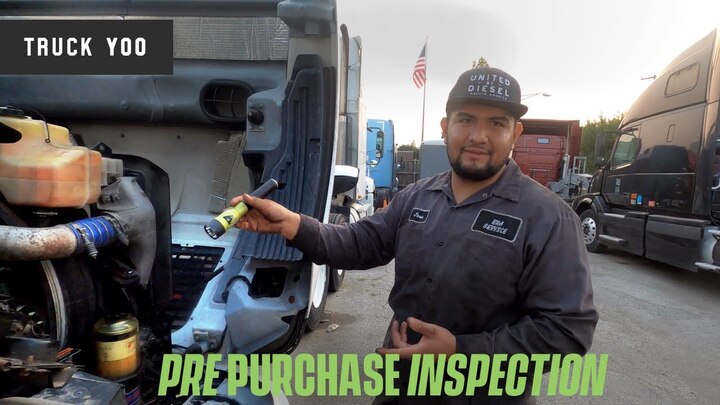
10. Get an Independent Pre-Purchase Inspection
Before finalizing the deal, arrange an independent inspection by a qualified heavy-duty truck mechanic. An objective assessment can help identify hidden problems and estimate upcoming repair costs.
Do not rely only on the seller's description or a quick visual inspection.
Make an Informed Truck-Buying Decision
Buying a used semi-truck requires careful planning and research. Taking the time to inspect the engine, transmission, brakes, tires, chassis, and maintenance records can help you avoid unexpected expenses.
Remember, the lowest purchase price does not always mean the best value. A reliable truck with a documented service history and a clean professional inspection can be a better long-term investment.
Stay connected with FleetGroup for more trucking tips, vehicle maintenance advice, fleet management insights, and transportation industry updates.


